Commercial Floor Sanding in Brent, HA9
Not every floor needs stripping back to bare wood. Where the existing seal remains sound, scheduled Commercial Floor maintenance in Brent or Commercial Floor Polishing in Brent may extend its working life. Where the finish has broken down, particularly around entrances, bar counters, serving areas and heavily used corridors, proper sanding and resealing is usually the more sensible long-term option.

Professional school hall floor sanding and restoration in Brent, HA9. This before-and-after project showcases the transformation of heavily scratched and worn strip timber flooring into a beautifully restored surface with natural wood tones and a durable-looking, glossy finish, ideal for educational and community spaces.
Commercial Timber Floors Across Wembley and Brent HA9
Wembley has a mixture of older properties, converted premises and modern commercial developments. Around Wembley High Road, Wembley Central and Ealing Road, traditional shops and business units can have timber floors altered repeatedly over decades. Near Wembley Park, larger hospitality, retail and leisure premises present different problems, particularly where entrances, public circulation routes and cleaning regimes put constant pressure on the finish.
The older building stock deserves particular attention. Timber in Victorian conversions, early twentieth-century premises and Edwardian institutional buildings may have been repaired, overlaid or sanded several times already. Near the historic Wembley High Street Conservation Area and the older streets around Wembley Hill Road, preserving sound original boards can be preferable to replacing them with modern flooring that does not suit the building.
We assess floors used by private offices, coworking centres, serviced offices, boutiques, showrooms, shopping-centre units, restaurants, cafés, pubs and takeaway premises. Restoration planning also covers workshops, factories, storage units, distribution depots, gyms, cinemas, studios, event venues, hotels, hostels and serviced accommodation.
Schools, colleges, universities, academies, clinics, dental surgeries, treatment rooms, churches, mosques and temples need particular consideration. Public access, vulnerable occupants, furniture movements, hygiene requirements and safe reopening often determine the working method just as much as the timber itself.
Sector-Specific Challenges and Structural Wear
A domestic floor might see a few pairs of shoes each day. A commercial entrance can see hundreds, along with trolley wheels, grit, wet footwear and repeated cleaning. Once abrasive dirt wears through the protective lacquer, the timber underneath starts absorbing contamination and moisture.
Applying a retail floor polish over that damage rarely solves the underlying problem. Polish cannot re-bond loose parquet, stabilise a flexing board or repair a failed seal. Some products also leave a film that becomes dangerously slippery when wet or interferes with the adhesion of future lacquer coats.
Common Problems Found in Commercial Premises
- Open joints and damaged gaps: Food debris, grit and cleaning moisture collect between boards, creating hygiene concerns and accelerating deterioration.
- Loose parquet and raised edges: Failed adhesive or movement within the substrate can create catches for chair castors, footwear and cleaning equipment.
- Slippery or uneven finishes: Oil, detergent residues, polished patches and wet entrances can affect slip resistance.
- Moisture ingress: Repeated wet mopping, leaking refrigeration equipment and poorly protected entrances can cause staining, swelling and adhesive failure.
- Heavy point loading: Shelving, reception desks, display cabinets and wheeled equipment can damage softer boards or weak flooring assemblies.
- Coating breakdown: Alcohol spills, cleaning chemicals, grease and repeated abrasion can leave cloudy, softened or completely exposed areas.
- Previous over-sanding: Older boards and engineered floors may have insufficient usable timber remaining for another aggressive sanding cycle.
Different premises require different solutions. A restaurant needs resistance to frequent spills and suitable cleaning products; a coworking office must withstand chair castors and concentrated pedestrian routes. Workshops and depots may need specific protection against wheeled loads, chemicals or impact that a conventional timber lacquer cannot provide.
In commercial premises, surface preparation is only part of the job. The floor must also be structurally suitable, maintainable and fit-for-purpose once staff and customers return.
Our Commercial Floor Sanding and Restoration Process
We favour a measured approach rather than taking a heavy abrasive to every floor. Timber thickness, previous coatings, moisture conditions, traffic levels and operational requirements all influence the specification. A proper inspection can also identify repairs that would otherwise show up after the first coat of lacquer.
Step 1: Subfloor Audit and Moisture Testing
Before quoting for extensive sanding, we establish what is actually underfoot. Quartersawn oak, pitch pine, teak, maple and beech behave differently, particularly where boards have been fitted over older joists or bonded to concrete. Identifying the species helps determine repair materials, abrasive selection and finishing compatibility.
We inspect loose fixings, hollow-sounding parquet, cupped boards, damaged tongues and previous sanding depth. On engineered boards, the remaining wear-layer thickness must be established before mechanical sanding is agreed.
Where moisture is suspected, the survey should include appropriate subfloor moisture testing, hygrometer checks and timber moisture readings. A damp concrete substrate cannot simply be hidden beneath new adhesive or lacquer. The source of moisture must be investigated and the readings assessed against the relevant flooring and adhesive manufacturer’s requirements.
We also establish site access, lift availability, electrical supply, parking, delivery arrangements and any restrictions on noisy work. On a shopping-centre unit or occupied office floor, these details can determine whether the job is practical overnight or needs a sectional programme.
Step 2: Timber Repairs, Re-bonding and Resin Gap-Filling
Loose timber needs securing before sanding. Otherwise, the machine can chatter across unstable boards, damage parquet corners or leave inconsistent levels. Where necessary, defective sections are lifted, the substrate assessed and suitable replacement timber selected to match the existing floor.
For compatible parquet installations, a silane-based flexible parquet adhesive may be specified to accommodate normal timber movement while maintaining a reliable bond. The substrate must be sound, clean and suitable for the adhesive system. Simply injecting glue into every hollow area is not a substitute for identifying why the bond failed.
Small, stable joints may be treated using resin-slurry gap filling, combining a compatible binder with fine timber sanding dust. Larger or regularly moving gaps often need matching timber slivers or a suitable flexible filler instead. Hard resin packed into an actively moving joint is liable to crack and break away.
Historic pitch pine floorboards need particular care around nail heads, split ends and old repairs. In public buildings, protruding fixings and raised edges should be rectified before the floor receives its final coating.
Step 3: HEPA Dust-Controlled Sanding and Surface Preparation
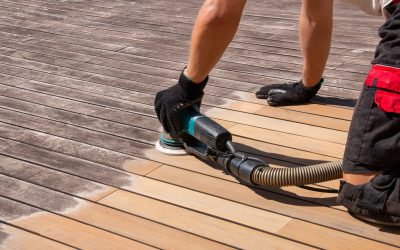
For suitable solid timber floors, professional belt sanding equipment such as a Lägler Hummel belt sander provides controlled removal of damaged coatings and surface wear. Edgers and specialist detail sanders deal with skirtings, corners, radiator positions and other awkward areas. Abrasive grades are progressed according to the timber, previous finish and required surface quality.
Commercial premises demand proper dust management. A suitable extraction arrangement, potentially incorporating HEPA H14 filtration, can help control fine airborne dust, but the complete extraction system must be correctly matched to the machinery and maintained. H14 filtration alone does not make a sanding operation completely dust-free.
Occupied sites also need sealed work zones, protected doorways, sensible cable routing and cleaning procedures that prevent dust spreading through ventilation and adjoining rooms. We plan these controls alongside site-specific COSHH assessments and risk assessment and method statements (RAMS).
The Health and Safety Executive’s guidance on wood dust explains why effective extraction and exposure control are necessary. Hardwood and softwood dust present occupational health risks, so suitable respiratory protection and exposure controls are essential where the assessment requires them.
Final preparation includes thorough vacuuming, edge checks and inspection under suitable lighting. Remaining adhesive contamination, uneven scratch patterns or unfilled defects can become painfully obvious once a clear finish is applied.

Step 4: High-Traffic Finishes – 2K Lacquers, Hardwax Oils and Anti-Slip Systems
The choice of finish should follow the actual use of the room. For busy offices, shops, educational premises and hospitality spaces, a professional 2K waterborne polyurethane lacquer is often a strong option. Its separate cross-linking catalyst reacts with the coating system to develop greater resistance to abrasion, cleaning and everyday wear than many basic single-component finishes.
Two-component products must be mixed accurately according to the manufacturer’s specified ratio and used within their stated pot life. Adding extra catalyst does not create a stronger floor; incorrect mixing can lead to curing problems and finish failure.
Where air quality and occupancy matter, we can assess lower-emission systems, including suitable products carrying EMICODE EC1 Plus low-VOC emission classification. That rating applies to qualifying products, not automatically to every component of a floor restoration system. Safety data sheets, ventilation arrangements and reoccupation conditions still need checking.
Hardwax oils can be appropriate for selected timber floors where a natural appearance and localised maintenance are priorities. They are not automatically the best answer for kitchens, wet entrances or heavily contaminated areas. Chemical resistance, cleaning routines and the possibility of future spot repairs all need consideration.
Slip resistance is particularly important in shops, hospitality venues, healthcare premises and public corridors. Where testing is required, the specification can include pendulum slip-resistance assessment using recognised methods, including BS 7976-2 or applicable current test standards and guidance. Anti-slip additives or specialist coatings should be selected for the actual footwear, contamination and cleaning conditions, rather than relying on a generic ‘non-slip’ label.
We avoid promising that a fresh floor can take full commercial traffic immediately. Some waterborne lacquers permit cautious pedestrian access after several hours under favourable conditions, but full chemical and mechanical cure can take several days and sometimes longer. Manufacturer instructions, ventilation, temperature and humidity determine the final handover programme.
Step 5: Aftercare and Commercial Floor Maintenance Protocols
A properly restored floor can be damaged quickly by the wrong cleaning product. Strong alkaline chemicals, steam cleaning, uncontrolled wet mopping and abrasive pads are common causes of avoidable finish deterioration. Cleaning contractors need clear instructions on dilution, damp-mopping methods and approved products.
For offices and retail premises, we recommend effective entrance matting, grit removal, suitable furniture glides and correctly specified chair castors. Restaurants and cafés need prompt spill removal and regular inspection around counters, service routes and entrances.
Where the finish is intact but beginning to dull, a professional maintenance clean and compatible screen-and-recoat programme may postpone the need for another full sanding cycle. Recoating should take place before large areas of bare timber become exposed.
We can discuss a practical inspection and maintenance schedule based on traffic, cleaning frequency and the coating manufacturer’s recommendations.
Floor Restoration for Different Commercial Sectors
Offices, Coworking Spaces and Serviced Offices
Chair castors, entrance grit and repeated movement between desks produce recognisable wear patterns. Work can be arranged around meeting rooms, reception areas and occupied zones, with particular attention to furniture protection, IT equipment and controlled access during coating.
Shops, Boutiques, Showrooms and Shopping-Centre Units
Retail floors need to withstand concentrated footfall while retaining an acceptable appearance under bright display lighting. Shopfront access, deliveries, neighbouring traders and centre management rules should be agreed before sanding starts.
Restaurants, Cafés, Pubs and Takeaway Premises
Spilt drinks, grease, cleaning chemicals and scraping furniture legs can wear through standard finishes surprisingly quickly. We assess the condition around bar fronts, dining tables and serving routes and recommend compatible protective finishes. Timber is not always suitable for commercial wet-preparation or wash-down areas, which may require another flooring system.
Factories, Workshops, Storage Units and Distribution Depots
Older timber floors sometimes survive in offices, stores, production rooms and loading-associated buildings. Heavy equipment, pallet movements and chemical exposure must be considered before restoration is specified. Not every industrial floor is suitable for a decorative polyurethane lacquer, especially where forklift traffic or heavy machinery is involved.
Gyms, Cinemas, Event Venues and Studios
Fitness and entertainment premises experience concentrated loading from seating, equipment and repeated public use. Timber movement, acoustic considerations, sports-floor requirements and potential slip hazards all affect the finish selection. Specialist sprung sports floors require an appropriate sports-floor specification rather than a standard domestic sanding package.
Hotels, Hostels and Serviced Accommodation
Reception floors, function rooms, stairs and circulation areas often need restoring without closing the whole property. Sectional access and careful coordination with housekeeping, fire routes and room occupancy can reduce disruption.
Clinics, Dental Practices and Treatment Rooms
Healthcare environments call for easy-to-clean surfaces and finishing systems compatible with the facility’s hygiene arrangements. Where frequent clinical disinfection or wet cleaning is required, the proposed timber finish must be checked against the actual cleaning chemicals and infection-control specification.
Schools, Colleges, Universities and Academies
Assembly halls, classrooms, libraries and corridors can have substantial areas of original timber worth retaining. Half-term, summer holiday and weekend programmes may offer the best opportunity for repairs, sanding, coating and adequate curing before pupils and staff return.
Churches, Mosques, Temples and Community Buildings
Places of worship frequently combine older timber construction with large gatherings and demanding event calendars. Careful work around pews, fixed seating, thresholds and historic joinery is essential. Low-odour finishes, safe access and sufficient curing time should be agreed around prayer, worship and community use.
Out-of-Hours Commercial Sanding Without Unnecessary Closure
The sanding itself is often the straightforward part. Deliveries, security permissions, alarms, lifts, isolating work areas, waste removal and sufficient coating cure time usually decide the programme. We discuss these matters before arranging a commercial site visit.
| Working Shift | Operational Benefits | Suitable Facilities |
|---|---|---|
| Overnight | Allows noisy preparation outside customer-facing hours. Reopening depends on the coating’s safe recoat, access and curing requirements. | Retail units, offices, cafés, pubs and selected hospitality areas. |
| Weekend Phased | Provides longer uninterrupted access for repairs, sanding and finishing, subject to sufficient curing time. | Corporate offices, schools, clinics, studios and educational buildings. |
| Sectional | Separates working areas from occupied space so selected operations can continue, with agreed barriers and circulation routes. | Hotels, coworking centres, larger shops, event venues and multi-room premises. |
Night work is not the same as next-morning readiness. A floor may be touch-dry without being ready for furniture, wheeled loads, wet cleaning or full public traffic. We advise on the difference and agree an appropriate reopening plan rather than treating every coating as a quick-drying product.
On larger premises, we consider whether independent areas can be treated in sequence. A sectional programme needs proper segregation so staff are not walking through freshly finished routes or tracking dust into adjacent occupied rooms.

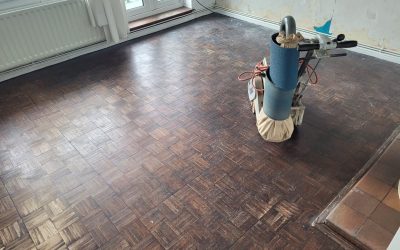
Commercial parquet wood block floor sanding and restoration in Brent, HA9. This before-and-after comparison highlights the transformation of worn, discoloured parquet flooring into a beautifully refreshed, smooth and natural-looking timber surface, revealing the original wood grain and distinctive square block pattern.
Health, Safety and Commercial Site Compliance
Working in a live commercial building places responsibilities on everyone involved. The contractor needs suitable methods and controls; the premises manager must communicate occupancy restrictions, known site hazards and operational requirements. The working area should never be left accessible to customers or staff while sanding, coating or unsafe curing conditions remain.
- RAMS documentation: Site-specific risk assessments and method statements covering machinery, noise, dust, access, manual handling and work sequencing.
- COSHH assessments: Controls for timber dust, adhesives, cleaning agents, lacquers, catalysts and other hazardous substances.
- Dust extraction: Suitable machinery-connected extraction, filtration, containment and housekeeping arrangements.
- Slip-risk management: Assessment of public circulation routes, likely wet contamination and the need for appropriate pendulum testing.
- Fire and escape routes: Maintaining agreed emergency access and coordinating temporary closures with the responsible person.
- Ventilation and reoccupation: Observing product safety data sheets, application conditions and manufacturer curing guidance.
- Contractor verification: Checking appropriate CSCS cards where required, site inductions, applicable training and commercial insurance documentation before mobilisation.
CSCS card status and contractor insurance levels should be confirmed against the actual team and project requirements. A CSCS card is not, by itself, proof of specialist floor sanding competence. Commercial clients should be able to review the relevant documentation rather than rely on an unsupported statement of compliance.
Commercial Floor Sanding Prices in Brent, HA9
A reliable commercial quotation depends on more than the floor area. We consider timber condition, existing finish, repair quantities, furniture movement, access restrictions, number of coats and any overnight or weekend labour requirements. A straightforward open-plan office will not carry the same preparation costs as a restaurant with fixed counters, difficult corners and grease-contaminated boards.
For a starting point, our published floor sanding prices in Brent include sanding-only options from £22 per m², sanding with clear lacquer from £25 per m² and high-traffic lacquer upgrades listed separately. These are indicative website prices, not a fixed commercial tender rate. The full specification and final cost are confirmed in writing after assessment.
Substantial repairs, moisture remediation, specialist slip-resistance testing and unusual working arrangements may require separate allowances. We prefer to identify these during the survey rather than offer an unrealistic low figure and add charges once the premises has been cleared.
For an idea of the finish achievable on suitable timber, visit our wood floor sanding and restoration gallery. Your own floor’s age, timber species and remaining wear layer will determine the realistic result.
A Proper Site Survey Before Commercial Work Begins
An initial assessment can usually begin with clear photographs, a short video and an approximate floor plan. Useful images include the main traffic routes, damaged joints, thresholds, fixed furniture and any areas showing dampness or lifting. This helps us establish the likely scope before arranging physical access.
For larger premises or floors with structural concerns, an on-site survey is important. Measurements, timber condition, moisture readings where necessary, finishing requirements and working-hour restrictions all contribute to a sensible written quotation.
The quotation should distinguish sanding, local repairs, gap filling, finishing, additional coating requirements and any agreed logistical charges. Where a commercial client requires RAMS, insurance schedules, relevant CSCS evidence or product data sheets, these should be checked and provided as appropriate before site mobilisation.
Established Brent Floor Sanding services cover both domestic and commercial timber restoration, with flexible working options including weekends and overnight arrangements. The precise crew, machinery, documentation and method are confirmed for the individual contract.